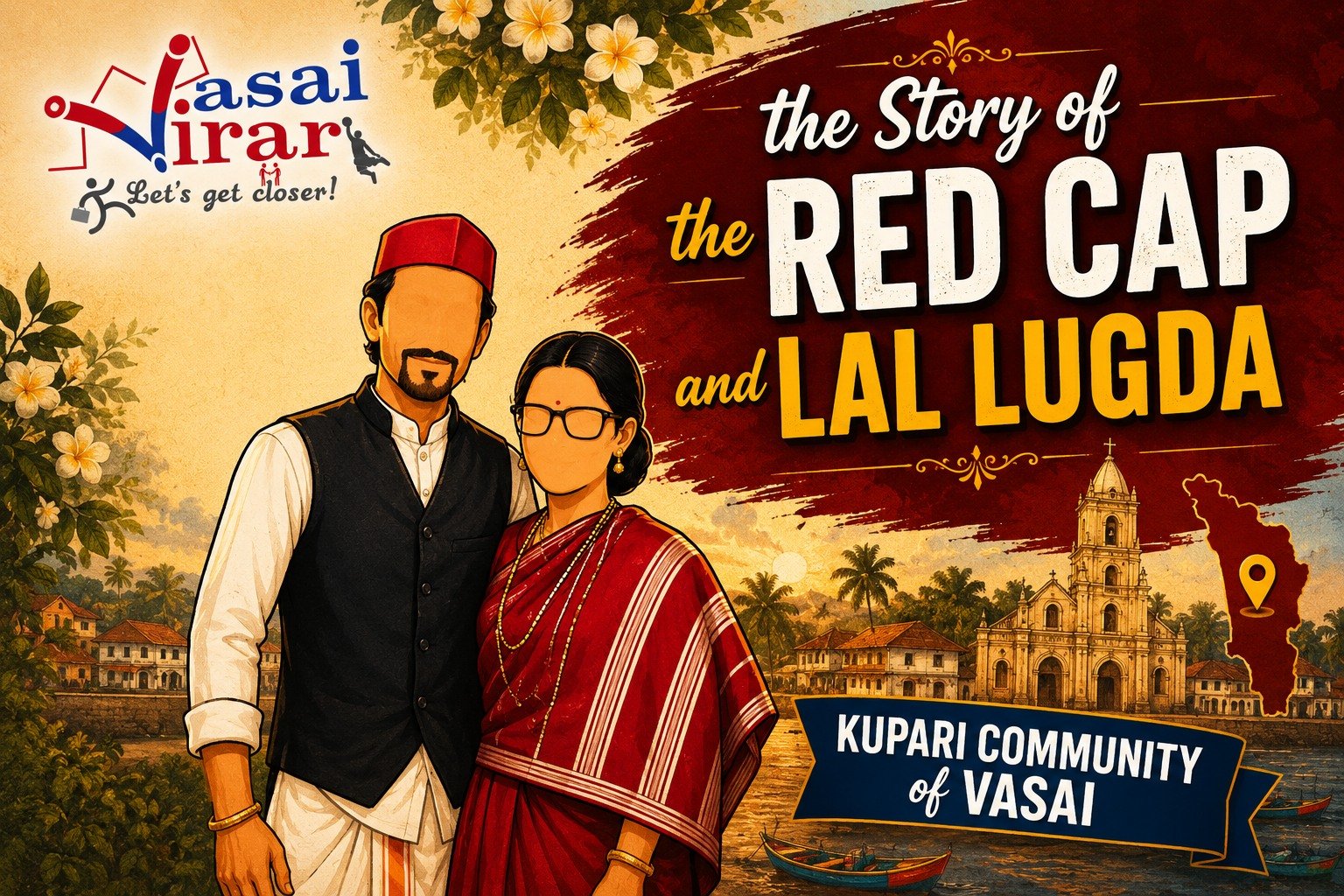
The traditional Red Cap and Lal Lugda were once important symbols of the Kupari Community in Vasai. While these cultural markers have largely disappeared from everyday life, they remain an important part of the Community’s Heritage and Identity.
“गेली ती लाल टोपी आणि गेले ते लाल लुगडे” is a phrase that brings back memories for many older residents of Vasai. It recalls a time when the Red Cap worn by Kupari men and the Lal Lugda worn by Kupari women reflected a strong sense of Community, Tradition, and Pride. Although these symbols are rarely seen today, they continue to hold a special place in the History of Vasai.
Cultural Identity of the Kupari Community
The Kupari Community is one of Vasai’s indigenous Communities with a rich cultural background. Traditional Clothing played an important role in expressing Community Identity and distinguishing the Kuparis from other Communities in the Region.
For generations, the Red Cap and Lal Lugda served as visible symbols of Heritage and Belonging.
Significance of the Lal Lugda
The Lal Lugda was a defining part of the traditional Attire worn by Kupari women. Its deep red colour represented Tradition, Strength, and Cultural Pride.
Women wore the Lal Lugda during:
- Festivals
- Family Gatherings
- Community Events
- Daily Activities
Traditional Jewellery often complemented the Attire, creating a distinctive Cultural Identity that was instantly recognizable throughout Vasai.
Symbolism of the Red Cap
The Red Cap was an equally important symbol for Kupari men. It represented Community Pride and Cultural Continuity.
The Cap was commonly worn during:
- Festivals
- Village Gatherings
- Religious Celebrations
- Community Functions
For many residents, the sight of groups of men wearing the Red Cap was once a familiar part of the social Landscape of Vasai.
Impact of Urbanization on Tradition
As Vasai developed and modern lifestyles became more common, traditional Clothing gradually gave way to contemporary Fashion.
Several Factors contributed to this change:
- Urbanization
- Education
- Migration
- Media Influence
- Changing Preferences
These developments encouraged younger Generations to adopt modern styles of Dress, leading to the decline of traditional Attire in everyday life.
Importance of preserving Cultural Heritage
Although the Red Cap and Lal Lugda are no longer common, they remain valuable parts of Kupari Heritage.
Efforts to preserve this Heritage include:
- Documentation of Stories
- Preservation of Photographs
- Recording of Oral Histories
- Cultural Programs
- Traditional Performances
These initiatives help ensure that future Generations understand the Traditions and Values of their Community.
Legacy of the Red Cap and Lal Lugda
The disappearance of the Red Cap and Lal Lugda represents more than a change in Fashion. It reflects the social and cultural transformation of an entire Community.
While modern life continues to influence the Region, the Legacy of these symbols remains deeply connected to the Identity of Vasai and its People.
Frequently asked Questions
1. What was the Lal Lugda?
The Lal Lugda was a traditional red Saree worn by women of the Kupari Community and symbolized Tradition, Pride, and Cultural Identity.
2. Why did the Red Cap become important?
The Red Cap became a recognizable symbol of the Kupari Community and represented Community Pride and Cultural Continuity.
3. Why are the Red Cap and Lal Lugda rarely seen today?
Urbanization, modern Fashion, Education, and changing social Preferences contributed to the decline of traditional Attire in everyday life.
4. How can Kupari Heritage be preserved?
Heritage can be preserved through Cultural Events, Photographs, Oral Histories, Documentation, and Community Programs.
The phrase “गेली ती लाल टोपी आणि गेले ते लाल लुगडे” remains a powerful reminder of Vasai’s Cultural Heritage. Although the Red Cap and Lal Lugda have largely disappeared from daily life, their Legacy continues to be woven into the Identity, History, and Memory of the Kupari Community.